
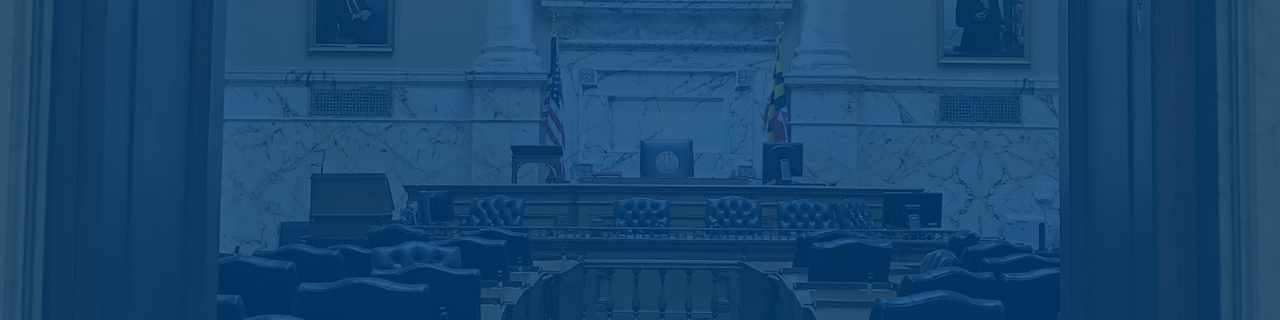
The 449th Session of the General Assembly is underway, with more than 900 bills already introduced in the House and Senate.
This year’s session was widely expected to be relatively quiet due to the upcoming election cycle, with primary elections in June and the general election in November. Historically, election-year sessions try to avoid major policy changes and expensive proposals. In the weeks leading up to the session, Governor Moore, House Speaker Jocelyn Pena-Melnyk, and Senate President Bill Ferguson dismissed the likelihood of tax increases.
Despite these expectations, the early focus of the legislature has been dominated by congressional redistricting. That issue emerged in response to a national effort by the Trump Administration to encourage Republican-led states to redraw congressional maps in ways that could favor GOP candidates. Governor Moore strongly advocates for another redistricting effort in Maryland, targeting the Eastern Shore district represented by the only Republican Congressman in the state, Any Harris.
Under the proposal, Harris’s district would be extended back across the Bay Bridge into Anne Arudel County and even Howard or Charles County. The goal would be to add enough Democratic voters to reduce the likelihood of Harris being re-elected. The plan as met resistance from Senate President Ferguson, who has questioned whether responding to national political pressure with another round of redistricting is a case of “two wrongs don’t make a right.” On a more practical basis, he has also raised concerns about more long term consequences, noting that reopening the map could create consequences for Democratic candidates in the 6th and 8th congressional districts. For now, Ferguson doesn’t seem inclined to move the issue forward, seeing it at a poor use of legislative time. However, the clash between Ferguson, Moore, and House leadership could shape the tone of the session and the political environment leading up to the election.
Beyond redistricting, lawmakers face several major policy battles. Rising energy costs continue to be a significant concern among Maryland residents and businesses. The state’s energy policy in recent years has been one of hope versus strategy, emphasizing renewable sources and diminishing the role of coal, nuclear, and natural gas. Critics argue that this transition has outpaced the reliability of renewable energy sources, contributing to higher costs and ongoing supply challenges.
As a result, Maryland now imports a substantial portion of the electricity we consume to fuel our cities, towns, houses, and businesses. Neighboring states that maintained a more diversified energy mix are reaping the financial benefits, while Maryland faces increasing costs and having to build new transmission lines to meet demand. Legislative committees responsible for energy policy are expected to confront these issues during the session. Failure to do so will force energy policy into the November election, putting incumbents in the hot seat.
Another major issue is the $1.5 billion structural deficit, following last year’s $3 billion shortfall. The previous gap gave us the Tech Tax, along with a series of increased fee and service charges. Governor Moore says he’s opposed to broad-based tax increases and has offered an FY2027 budget proposal with almost $900 million in spending cuts, with the rest of the gap addressed through one-time transfers and other budget adjustments.
Stay tuned, as future updates will take a closer look at individual policy proposals on topics expected to receive attention including healthcare, wages, workers’ comp, transportation, data centers, and civil liability.
Frederick Chamber Insights is a news outlet of the Frederick County Chamber of Commerce. For more information about membership, programs and initiatives, please visit our website.